The remarkable benefits of amylin protein as a treatment for Alzheimer’s disease
Alzheimer’s disease (AD) is known to be a multifactorial disease. [2] That is, several factors contribute to the pathogenic development of this disorder. However, amyloid beta (Aβ) accumulation in the brain is highlighted as critical in developing the disease. [2,3] Recent studies have shown that long before the onset of symptoms of the disease, the accumulation of the Aβ protein forms plaques between neurons which turn out to be very toxic to neurons. [2,3] In addition, it has been exposed that these plaques are responsible for progressive cognitive impairment. [1,2,3] The accumulation of Aβ induces neuronal cells to die. Aβ plaques constantly induce neuroinflammation, so it, in turn, causes injury to nerve cells affecting memory and other cognitive factors. [2,3]
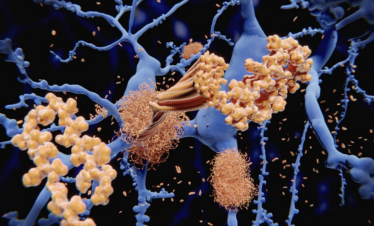
Representation of the hallmarks of AD in the brain.
Countless studies have found a protein with Aβ like characteristics called amylin. [1,2,3,5] These two proteins generate soluble forms of oligomeric form intermediates, which have been found to have potent cytotoxicity. [2,6] This cytotoxicity affects cell membranes and organelles, inducing inflammatory responses, causing reactive oxygen species, and overloading the protein-splitting. [1,2] These two proteins are so similar that their oligomers can even interact with each other accumulating in the brain in the same way as Aβ alone. [1,2] Amylin accumulation in the brain of AD rat models has been found to contribute significantly to brain damage caused by the illness. [2,6]In addition to AD, amylin has been found in high concentrations in the brain of patients with dementia and type 2 diabetes(T2DM). [2]