Hallmarks of Aging Part 2 of 4
As we age, our bodies undergo a complex series of changes that result in a decline in our overall health and an increased risk of age-related diseases. The aging process is multifaceted, and recent research has identified three key biological mechanisms that play a central role in this process. These mechanisms are Cellular Senescence, Mitochondrial Dysfunction, and Deregulated Nutrient Sensing.Cellular Senescence is a process in which cells become irreversibly arrested in a state of growth arrest, preventing them from dividing and contributing to tissue repair and regeneration. While cellular senescence can be a beneficial response to stress or damage in some cases, its chronic activation can lead to the accumulation of senescent cells in our tissues, which can contribute to inflammation and other harmful effects.Mitochondrial Dysfunction refers to the decline in the functioning of our mitochondria, which are the energy-producing organelles in our cells. As we age, the efficiency of our mitochondria decreases, leading to a reduction in energy production and an increase in the production of harmful byproducts known as reactive oxygen species.Deregulated Nutrient Sensing refers to the dysregulation of various signaling pathways that control our metabolism and nutrient uptake. This dysregulation can lead to the accumulation of harmful byproducts and the development of age-related diseases such as diabetes and cardiovascular disease.Understanding these three antagonistic hallmarks of aging is crucial for developing interventions and therapies that can improve health span and extend lifespan. Remember, “The antagonistic hallmarks of aging are hallmarks that can have beneficial or deleterious effects on the cell, depending on the level of intensity. When regulated properly, these hallmarks are beneficial or protective, but can be deleterious when levels are too high, or unregulated.” By targeting these mechanisms, researchers hope to develop strategies that can slow or even reverse the aging process, paving the way for healthier and more productive lives in old age.
Cellular Senescence
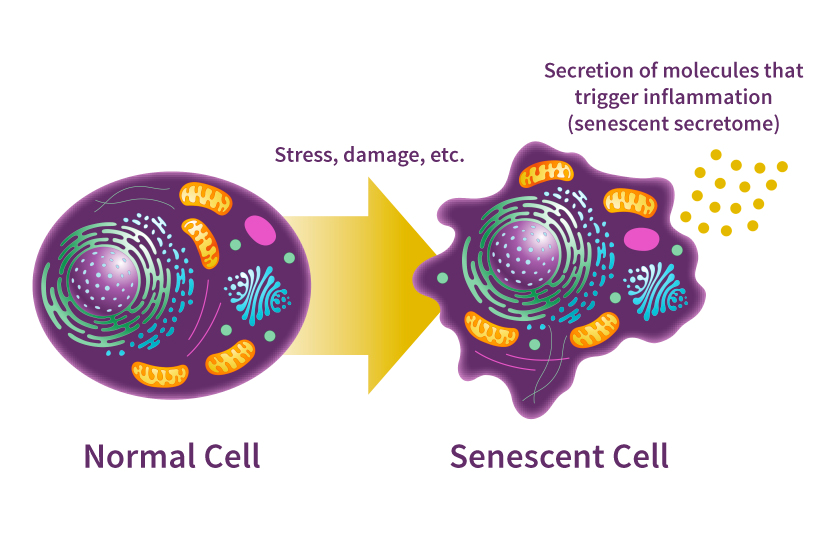
Cellular senescence is a complex and multi-step process that is a natural part of the aging process. When cells undergo senescence, they enter a state of permanent growth arrest, which means they can no longer divide or replicate. This process is triggered by a variety of stresses, including oxidative stress, DNA damage, telomere shortening, and other insults. When these stresses occur, cells activate a network of signaling pathways that culminate in the activation of tumor suppressor proteins, such as p16INK4a and p53, which drive the cells into senescence. This process is thought to be a protective response, as it prevents damaged or potentially cancerous cells from continuing to replicate and potentially causing harm.
During cellular senescence, cells undergo several changes. They become enlarged and flattened in shape, and they also undergo changes in gene expression, metabolism, and morphology. Senescent cells also produce a set of molecules known as the senescence-associated secretory phenotype (SASP), which includes pro-inflammatory cytokines, chemokines, and growth factors. The SASP can contribute to inflammation and tissue damage, which in turn can lead to the development of age-related diseases.
While cellular senescence can be beneficial in certain contexts, such as during embryonic development or in response to tissue damage, its chronic activation can contribute to the aging process and the development of age-related diseases. Senescent cells can accumulate in various tissues and organs throughout the body, and their presence can contribute to tissue dysfunction and inflammation. For example, studies have shown that the accumulation of senescent cells in the skin can contribute to the development of age-related skin conditions, while the accumulation of senescent cells in the lungs can contribute to the development of chronic obstructive pulmonary disease (COPD).