SHMOOSE microprotein, a novel mitochondrial DNA variation connected to Alzheimer’s Disease pathology
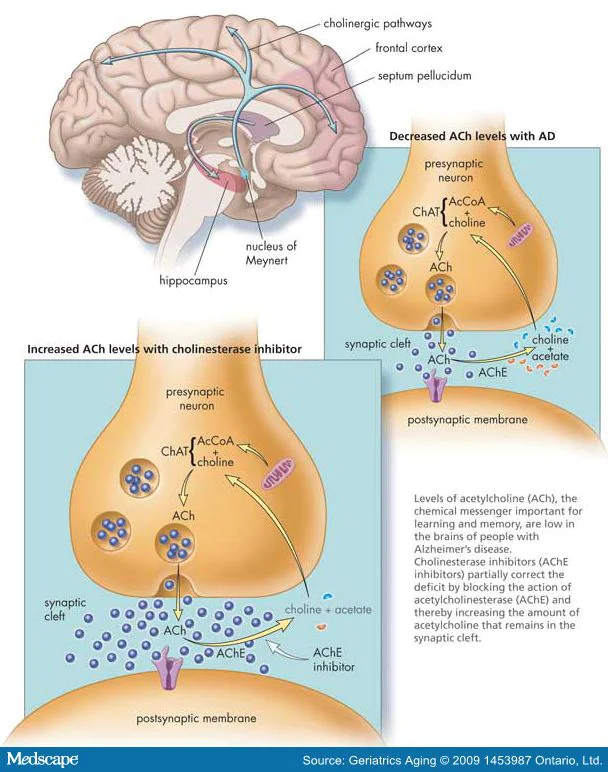
Alzheimer’s is a disease that has recently caught the attention of researchers because of the alarming increase in cases through the years. [1,7] This rare but common disorder affects around 6.07 million people in 2020 in the United States. [5] Now, there is no cure for AD. [7] The complexity of AD pathology makes it challenging for investigators to find solutions like treatments for the disease. Even though there is no cure, three acetylcholinesterase inhibitors therapies are approved by the FDA (donepezil, galantamine, and rivastigmine). [7] Acetylcholinesterase inhibitors therapies help compensate death of cholinergic neurons and offer symptomatic relief by inhibiting acetylcholine (Ach) turnover and restoring synaptic levels of this neurotransmitter. [7] The inhibition of the cholinesterase (AChE) helps in the deficit of Ach in AD patients by avoiding the conversion of Ach to acetate and choline, thus increasing the Ach levels in the synaptic cleft (see FIGURE 1).