The Role of Senescent cells in Alzheimer’s Disease
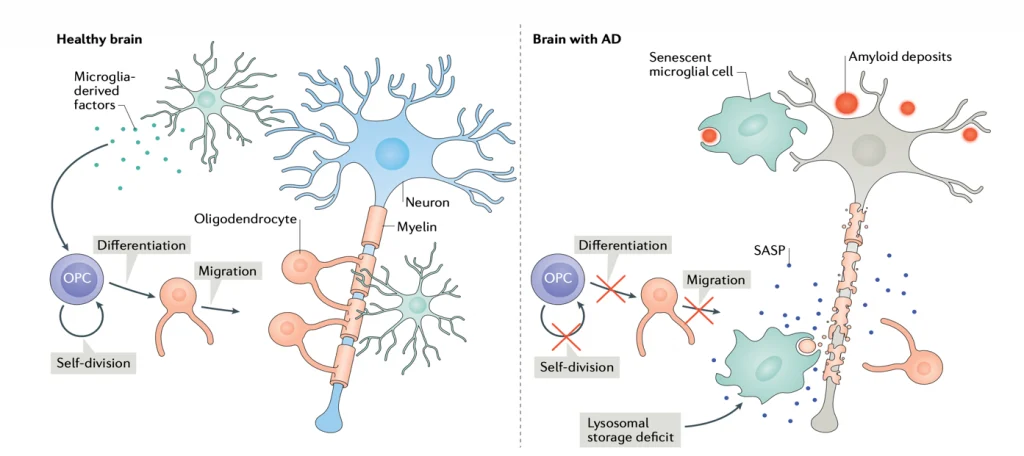
The aging process is strongly associated with developing diseases, such as cardiovascular conditions, hypertension, cancer, diabetes mellitus, osteoporosis, and neurodegenerative diseases, among others. [10,12] Alzheimer’s disease (AD) is no exception since aging is a risk factor for late-onset AD (more than 95% of AD cases). [14,15] Another factor highly associated with aging is the increased cellular senescence population of different cell types as we approach older ages (see Fig. 3).[14] Several studies suggest cellular senescence is critical in aging and connected conditions like AD.[2,5,10] Recent investigations have pointed out that senescent cells promote the pathogenesis of AD.[3-6] But what are senescent cells? Senescent cells’ particular feature is stopping the proliferation by entering a cell cycle arrest. [12-15] these senescent cells are also known to develop apoptosis resistance and secrete proinflammatory molecules.[11] Senescent cells not only remain even though they are “damaged” but also liberate various chemicals that can initiate inflammation.[3,7] Cellular senescence emerges when a cell receives considerable stress, driving it to “reprogram” its fate to an unlimited cell cycle arrest.[7,9] DNA damage, oncogene triggering, mitochondrial dysfunction, and the accumulation of proteins like the tau and the amyloid beta (Aβ) are well known to initiate senescence in different types of cells (see Fig. 1).[2,12,14]
Figure 1. The comparison between a healthy brain and an AD brain with senescent cells.[14]