What is GHK-Cu?
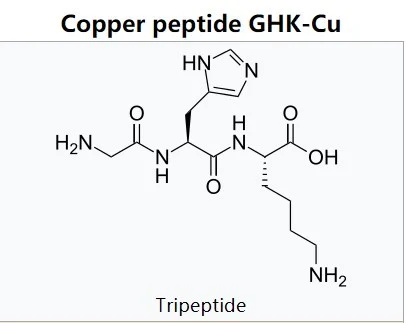
GHK-Cu is a naturally occurring copper complex that was first identified in human plasma, but has hence been found in multiple locations such as saliva and urine. Copper peptides are small, naturally occurring protein fragments that have high affinity for copper ions, which are critical to normal body function. GHK-Cu has a variety of roles in the human body including, but not limited to, promoting activation of wound healing, attracting immune cells, antioxidant and anti-inflammatory effects, stimulating collagen and glycosaminoglycan synthesis in skin fibroblasts, and promoting blood vessel growth.There has been evidence that has shown that it acts as a feedback signal that is generated after tissue injury. First, it seems to act as a potent protector of tissue and anti-inflammatory agent that control the oxidative damage that occurs post-tissue injury. Further, it then plays a big role in signaling tissue remodeling which removes damaged/scarred tissue and generates new, healthy tissue. However, these positive effects decline with age because the concentration of GHK-Cu in the body decreases with age. Thus, there is an increase in inflammation, cancerous activity, and tissue destruction.