What is Thymosin Beta-4?
The beta-thymosins (b-thymosins) comprise a family of structurally related, highly conserved amino acid sequences in species ranging from mammals to echinoderms. Of the 16 known family members, thymosin β4 (Tb4), thymosin β10 (Tb10), and thymosin β15 (Tb15) are found in man.
Thymosin beta-4 (TB4) is a 43 amino acid, 5kDa polypeptide that is an important mediator of cell proliferation, migration, and differentiation. TB4 is the most abundant member of the β- thymosin family in mammalian tissue and is regarded as the main G-actin sequestering peptide. It is found in all tissues and cell types except red blood cells. Thymosin beta-4 is angiogenic and can promote endothelial cell migration and adhesion, and angiogenesis. TB4 also accelerates wound healing and reduces inflammation and scarring when applied in dermal wound-healing assays.
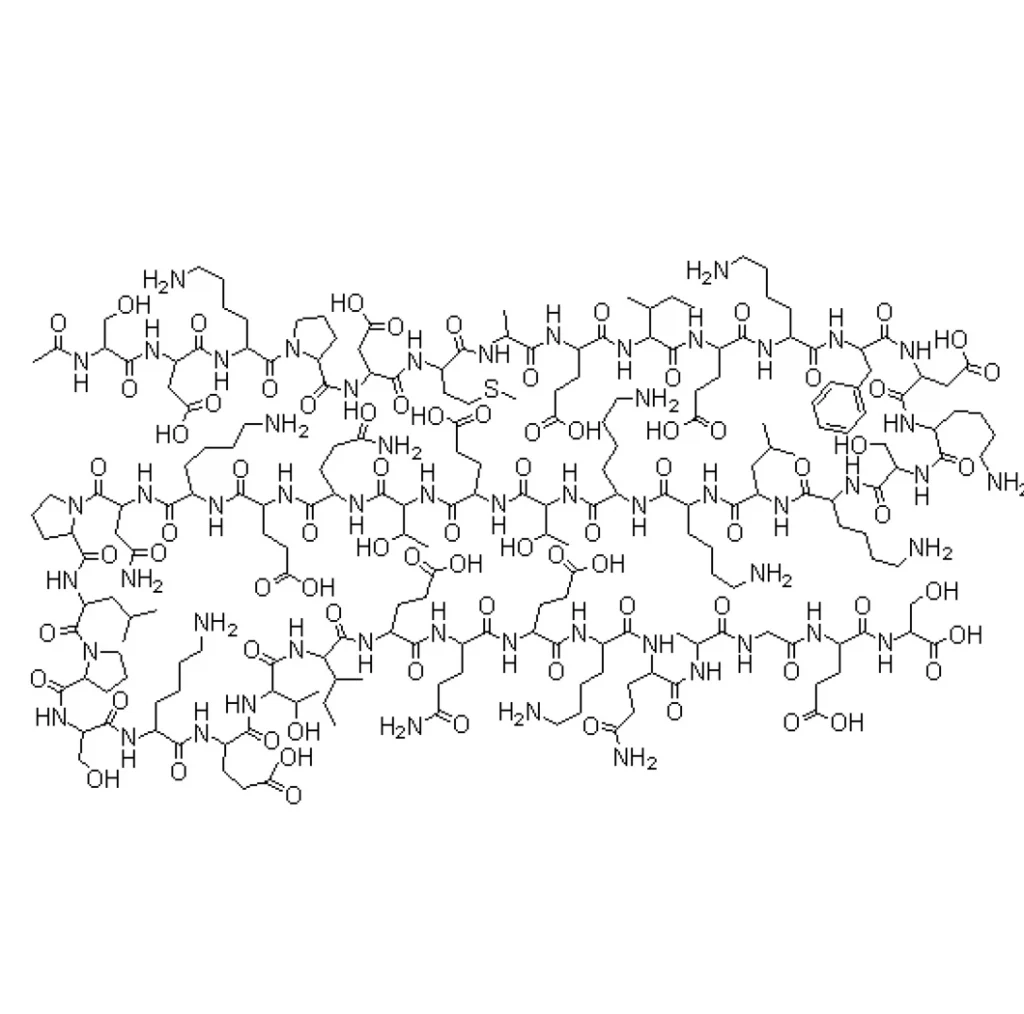
Beta thymosins bind and sequester monomeric actin, thus preventing actin polymerization and formation of filamentous actin. Actin is a vital component of cell structure and movement. Actin is involved in many important non-muscle cellular processes, including cell locomotion, chemotaxis, phagocytosis, and cytokinesis. Of the thousands of proteins present in cells, actin makes up to 10% of the total proteins in a cell, representing a major role in the genetic makeup of the cell.
Animal studies of disease and repair when using thymosin beta-4, the major actin-sequestering molecule in mammalian cells, have provided a base for the ongoing multicenter clinical trials for wound healing, including dermal, corneal, and cardiac. TB4 has multiple biological activities, which include down-regulation of inflammatory chemokines and cytokines, and promotion of cell migration, blood vessel formation, cell survival, and stem cell maturation.
Thymosin beta-4 also inhibits inflammation, microbial growth, scar formation (by reducing the level of myofibroblasts), and apoptosis, and protects cells from cytotoxic damage, including glutamate neuronal toxicity. In addition, it binds to G-actin, blocks actin polymerization, and is released with factor X by platelets. These activities contribute to the multiple wound healing properties that have been reported in animal and human studies.