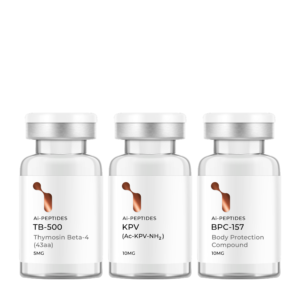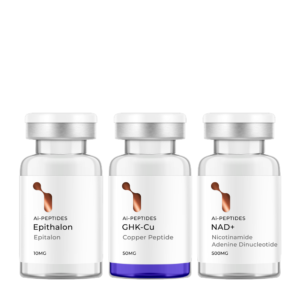


Restock in progress. Add your email and we will tell you the moment this compound is back in stock.
One email when this is back in stock. No spam, unsubscribe anytime.
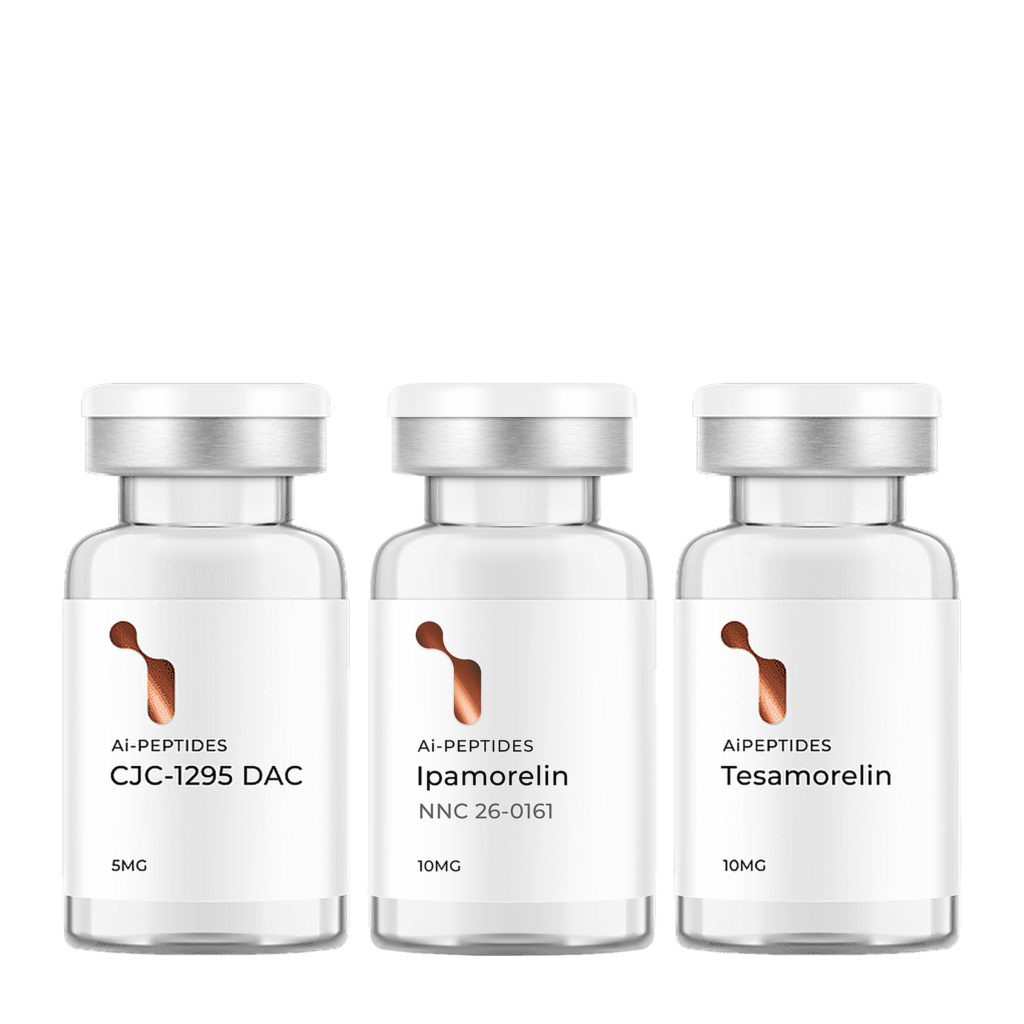
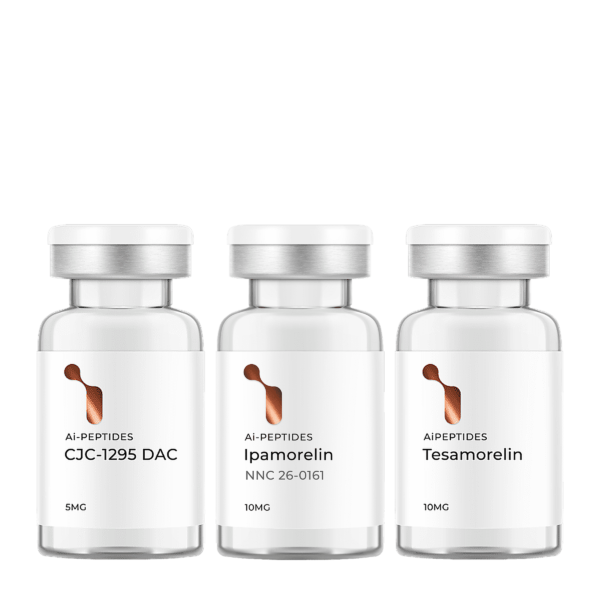
Multi-Pathway Research Bundle is supplied as a set of laboratory research compounds with defined reference identities. The set contains CJC-1295 DAC, IPAMORELIN, TESAMORELIN each in its own vial.
This listing is limited to product identity, analytical documentation, and research-use status. Each component is provided for qualified laboratory research only and is not intended for human or veterinary use. Each batch is independently tested for identity, purity, and consistency, with a lot-specific Certificate of Analysis provided for documentation and internal research records.
Each compound in this set has been characterised in preclinical laboratory models. The primary studies below, in animal and in-vitro models, examined cellular, biochemical, and mechanistic endpoints. The literature is preclinical: it describes the compounds, not any outcome in humans.
In vitroPentadecapeptide BPC 157 enhances the growth hormone receptor expression in tendon fibroblastsChang et al. · 2014 · MoleculesIn cultured rat tendon fibroblasts, the peptide was studied for growth hormone receptor expression at the mRNA and protein level, with a proposed mechanism via JAK2 signal transduction.Read the study ↗
Animal modelModulatory effects of BPC 157 on vasomotor tone and the activation of Src-Caveolin-1-endothelial nitric oxide synthase pathwayHsieh et al. · 2020 · Sci RepIn isolated rat thoracic aorta, the peptide was studied for endothelium-dependent vasomotor-tone endpoints, with a proposed mechanism via the Src-Caveolin-1-eNOS pathway.Read the study ↗
In vitroThe actin binding site on thymosin beta4 promotes angiogenesisPhilp et al. · 2003 · FASEB JIn an in-vitro endothelial and chick aortic-ring model, the actin-binding motif of the peptide was mapped as the structural determinant of endothelial adhesion and vessel-sprouting endpoints.Read the study ↗
In vitroThymosin beta4 induces endothelial progenitor cell migration via PI3K/Akt/eNOS signal transduction pathwayQiu et al. · 2009 · J Cardiovasc PharmacolIn cultured endothelial progenitor cells, the peptide was assayed for dose-dependent cell-migration endpoints, with a proposed mechanism via PI3K/Akt/eNOS signal transduction.Read the study ↗
Animal modelHuman growth hormone-releasing factor (hGRF)1-29-albumin bioconjugates activate the GRF receptor on the anterior pituitary in rats: identification of CJC-1295 as a long-lasting GRF analogJette et al. · 2005 · EndocrinologyIn cultured rat anterior-pituitary cells and rats, the albumin-bioconjugated analog activated the GRF receptor and extended plasma residence.Read the study ↗
Animal modelOnce-daily administration of CJC-1295, a long-acting growth hormone-releasing hormone (GHRH) analog, normalizes growth in the GHRH knockout mouseAlba et al. · 2006 · Am J Physiol Endocrinol MetabIn GHRH-knockout mice, the analog raised pituitary GH mRNA and somatotroph number via the GH/IGF-1 axis.Read the study ↗
No preclinical study on AOD 9604 currently meets our publication standard for this page. A Certificate of Analysis and a Safety Data Sheet are available on request.
Full documentation, on the record. A Certificate of Analysis and a Safety Data Sheet are available on request for every batch.
View COA — CJC 1295 W DAC ↗ View COA — Ipamorelin COA ↗ View COA — Tesamorelin COA ↗Links open the original study on PubMed. For research and educational purposes, descriptive of the published preclinical literature, not therapeutic claims about any ai-peptides product.