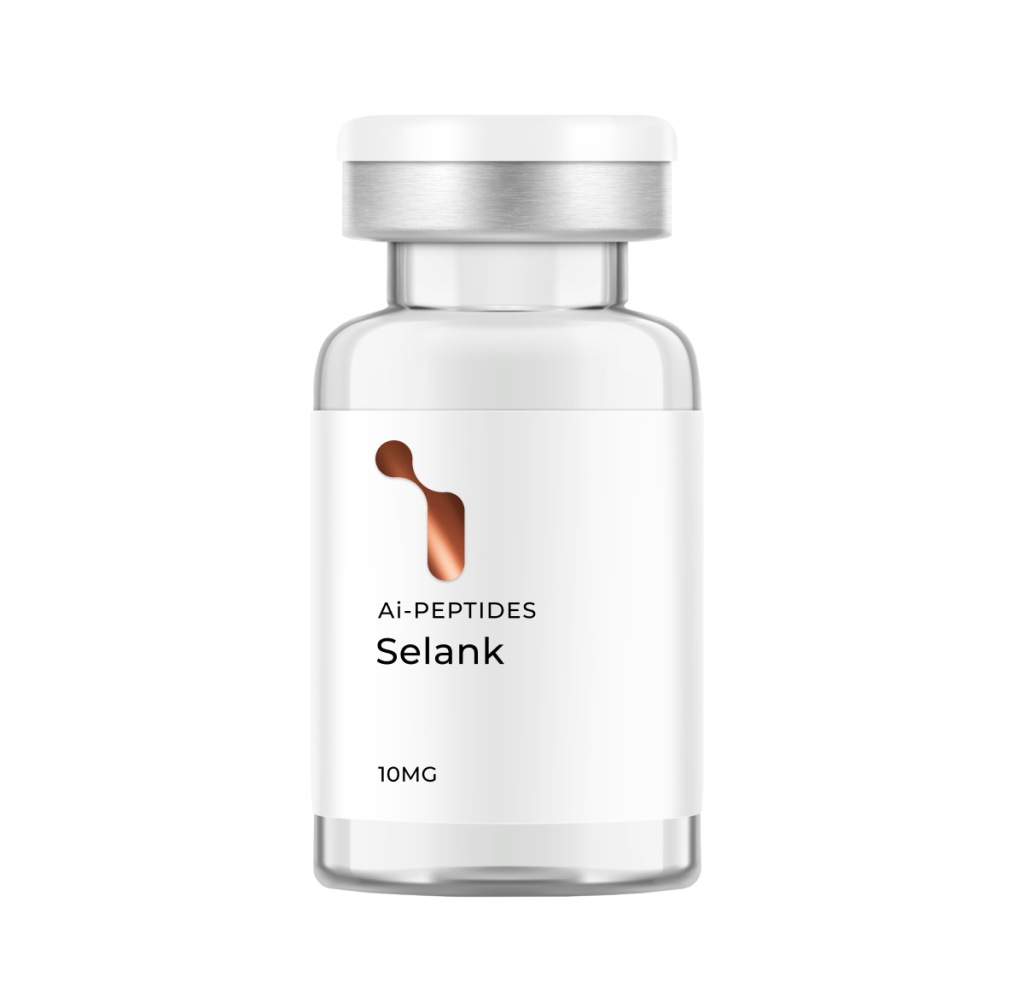
Selank
Selank

 Crypto
Restock in progress. Add your email and we will tell you the moment this compound is back in stock.
One email when this is back in stock. No spam, unsubscribe anytime.
Product details
Selank is a synthetic heptapeptide, a tuftsin analog built on the immune-active fragment tuftsin with a C-terminal tripeptide extension added to slow enzymatic breakdown. It belongs to the regulatory neuropeptide class.
In the published preclinical literature, Selank has been characterised at the molecular and cellular level as a modulator of central neurotransmission, with reported work on the GABAergic system in rodent and ex-vivo neural models, assayed by gene-expression and electrophysiological methods. It is supplied as a research compound and is not intended for human or veterinary use.
Full specifications
Complete your order
supplied for laboratory research only
Recently viewed
picks up where you left off
Research
Selank has been characterised in preclinical laboratory models. The primary studies below, in rodent and ex-vivo neural models, recorded gene-expression and electrophysiological endpoints centred on the GABAergic system, the inhibitory neurotransmitter pathway the compound is studied against. The literature is preclinical; it describes the compound, not any outcome in humans.
2 preclinical studies indexed · gabaergic and neurotransmission signalling · links open on PubMed
GABAergic and neurotransmission signalling 2 studies
Animal model
Selank administration affects the expression of some genes involved in GABAergic neurotransmission
In rat frontal cortex, the expression of 84 neurotransmission-related genes (including a major GABA receptor subunit) was assayed by real-time PCR at 1 and 3 hours after a single administration; the changes were measured against those produced by GABA itself, as a gene-expression endpoint of GABAergic-system modulation.
Read the study ↗
Animal and ex vivo
Effect of Selank on spontaneous synaptic activity of rat hippocampal CA1 neurons
In rat hippocampal slices, the compound was applied to pyramidal CA1 neurons and the amplitude and discharge rate of spontaneous inhibitory postsynaptic currents were recorded across a 1 to 8 micromolar concentration range as an electrophysiological endpoint.
Read the study ↗
Links open the original study on PubMed. For research and educational purposes, descriptive of the published preclinical literature, not therapeutic claims about any ai-peptides product. A Certificate of Analysis and a Safety Data Sheet are available on request for every batch.
Reviews
Verified-order reviews on service, shipping, and product quality appear here once the first order is reviewed.