Ipamorelin - Ai-Peptides

Ai-Peptides

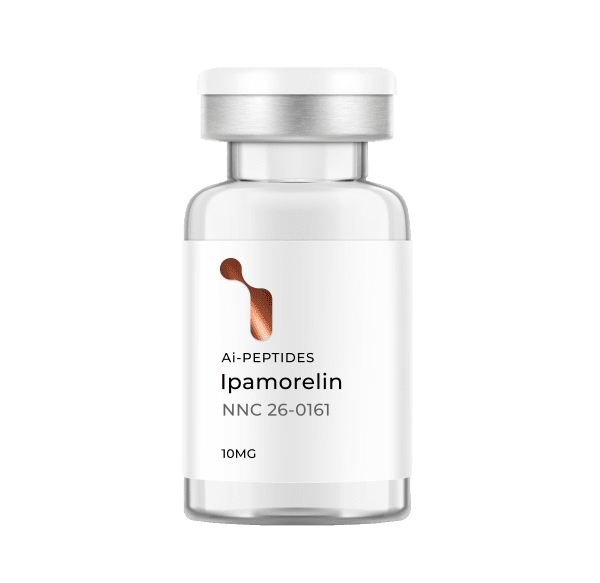
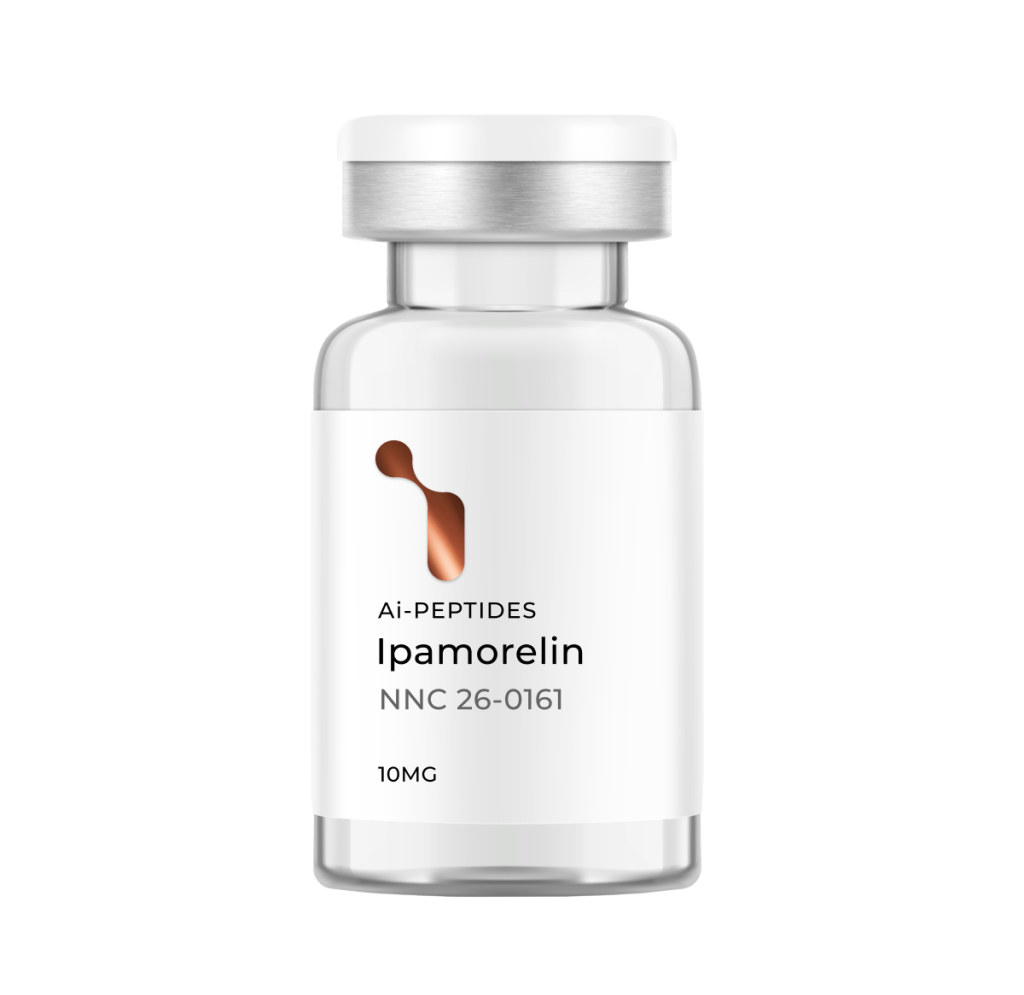
Ipamorelin

IPAMORELIN

$80.0  USD

Size: 10mg

Ipamorelin is a small synthetic peptide that signals the pituitary gland to release growth hormone. It is considered selective, meaning it acts mainly on growth hormone pathways without strongly affecting other hormones.

Researchers are interested in Ipamorelin because it may help support growth hormone release and related recovery pathways in research settings.

Our Ipamorelin is produced to a very high purity standard (≥99%) and every batch is independently tested for quality and consistency, with a Certificate of Analysis (COA) provided for transparency.

$80.0  USD
1
$76.0  USD 5%
5
$72.0  USD 10%
10
$68.0  USD 15%
20+

Out of stock

Expiry date 3/12/27
Date Produced 3/12/25
CAS # 170851-70-4
Formula C₃₈H₄₉N₉O₅
M.W. 711.868 g/mol
REF 386264-39-7
Purity 99% HPLC
RUO Research Use Only

Not for human or veterinary use. Made in USA

This product is intended as a research chemical only. Not for human use. Peptides will arrive in a lyophilized (powder) form for maximum stability.

CAS # 170851-70-4
Formula C₃₈H₄₉N₉O₅
M.W. 711.868 g/mol
REF 386264-39-7
Purity 99% HPLC
RUO Research Use Only

Storage Instructions:

All of our products are manufactured using the Lyophilization (Freeze Drying) process, which ensures that our products remain 100% stable for shipping for up to 3-4 months.
Once the peptides are reconstituted (mixed with bacteriostatic water), they must be stored in the fridge to maintain stability. After reconstitution, the peptides will remain stable for up to 30 days.

Lyophilization is a unique dehydration process, also known as cryodesiccation, where the peptides are frozen and then subjected to low pressure. This causes the water in the peptide vial to sublimate directly from solid to gas, leaving behind a stable, crystalline white structure known as lyophilized peptide. The puffy white powder can be stored at room temperature until you’re ready to reconstitute it with bacteriostatic water.

Once peptides have been received, it is imperative that they are kept cold and away from light. If the peptides will be used immediately, or in the next several days, weeks or months, short-term refrigeration under 4C (39F) is generally acceptable. Lyophilized peptides are usually stable at room temperatures for several weeks or more, so if they will be utilized within weeks or months such storage is typically adequate.

However, for longer term storage (several months to years) it is more preferable to store peptides in a freezer at -80C (-112F). When storing peptides for months or even years, freezing is optimal in order to preserve the peptide’s stability.


CAS: 170851-70-4

Intended Use: Ipamorelin is designed for research purposes only. All peptides require reconstitution with Bacteriostatic Water (BAC Water), sold separately.

Storage: Store the vial in a cool, dry place away from direct sunlight. Once reconstituted, keep refrigerated at 2–8°C.

Solubility: Reconstitute with Bacteriostatic Water for best results.

Vial Size: 10mg per vial

Shelf Life: The lyophilized form has a shelf life of up to 24 months when properly stored. Once reconstituted, refrigerate and use within 4–6 weeks.

Handling: Ensure proper sanitization techniques are used during handling and reconstitution.

Ipamorelin: Research Summary

1. Mechanism of Action

Ipamorelin is a synthetic pentapeptide (Aib-His-D-2-Nal-D-Phe-Lys-NH2) developed by Novo Nordisk that acts as a selective agonist at the growth hormone secretagogue receptor (GHSR-1a), the ghrelin receptor [1]. It stimulates pituitary release of growth hormone with potency comparable to GHRP-6, but in published preclinical and human studies it did not significantly raise ACTH, cortisol, prolactin, FSH, LH, or TSH even at doses far above those producing maximal GH release [1,2]. Unlike ghrelin itself, ipamorelin in published human studies did not produce a clinically meaningful appetite or food intake signal in healthy volunteers at the doses studied [2].

2. Key Studies

Raun et al., 1998 (European Journal of Endocrinology)

  • Design: In vitro receptor binding and in vivo dose-response study.
  • Population: Rat pituitary cells, swine, rats.
  • Intervention: Ipamorelin compared with GHRP-6, GHRH, and other secretagogues.
  • Finding: Ipamorelin released GH with efficacy similar to GHRP-6 and GHRH but, in contrast to other GHRPs, did not stimulate ACTH or cortisol release even at doses more than 200-fold above the GH ED50.
  • Citation: [1]

Gobburu et al., 1999 (Pharmaceutical Research)

  • Design: Randomized, double-blind, placebo-controlled single ascending dose pharmacokinetic and pharmacodynamic study.
  • Population: 40 healthy male volunteers (8 per dose level, 6 active and 2 placebo).
  • Intervention: 15 minute intravenous infusion of ipamorelin at 0.003, 0.01, 0.03, 0.06, or 0.1 mg per kg.
  • Finding: Dose-proportional Cmax and AUC, terminal half-life approximately 2 hours, clearance 0.078 L per hour per kg. GH release peaked at about 40 minutes and was dose dependent. No serious adverse events.
  • Citation: [2]

Svensson et al., 2000 (Journal of Bone and Mineral Research)

  • Design: Controlled animal study with multiple GH secretagogues.
  • Population: Adult female rats.
  • Intervention: Daily subcutaneous ipamorelin, GHRP-6, or vehicle for 12 to 15 weeks.
  • Finding: Ipamorelin and GHRP-6 increased body weight gain and total and cortical bone mineral content compared with vehicle.
  • Citation: [3]

Andersen et al., 2001 (Growth Hormone and IGF Research)

  • Design: Controlled rodent osteopenia model.
  • Population: Adult rats treated with glucocorticoid to suppress bone formation.
  • Intervention: 3 months of subcutaneous methylprednisolone, ipamorelin, or both.
  • Finding: Combined ipamorelin and glucocorticoid increased periosteal bone formation rate approximately fourfold versus glucocorticoid alone, partly reversing the steroid-induced suppression.
  • Citation: [4]

Beck et al., 2014 (International Journal of Colorectal Disease)

  • Design: Phase 2 randomized, multicenter, double-blind, placebo-controlled proof-of-concept trial.
  • Population: 114 adults undergoing open or laparoscopic small or large bowel resection (n=87 in primary analysis).
  • Intervention: Intravenous ipamorelin 0.03 mg per kg twice daily versus placebo, from postoperative day 1 until day 7 or discharge.
  • Finding: Time to first bowel movement was shorter with ipamorelin; the safety profile was similar to placebo. Subsequent Phase 3 trials did not confirm the primary endpoint.
  • Citation: [5]

3. Pharmacokinetics and Dosing (as reported in studies)

After intravenous infusion in healthy adults, ipamorelin showed dose-proportional kinetics with a terminal half-life of approximately 2 hours, clearance of 0.078 L per hour per kg, and steady-state volume of distribution of 0.22 L per kg [2]. Published clinical dosing has ranged from 0.003 to 0.1 mg per kg intravenously as single doses, and 0.03 mg per kg twice daily in the postoperative ileus trial [2,5]. In preclinical chronic studies, daily subcutaneous microgram to milligram per kg doses for up to 15 weeks were tolerated without notable off-target endocrine effects [1,3,4]. Across the human dataset the most frequently reported adverse events were mild and transient, with no signals of cortisol elevation or prolactin elevation attributable to drug [1,2,5].

4. References

  1. Raun K, Hansen BS, Johansen NL, Thogersen H, Madsen K, Ankersen M, Andersen PH. Ipamorelin, the first selective growth hormone secretagogue. European Journal of Endocrinology. 1998;139(5):552 to 561. https://pubmed.ncbi.nlm.nih.gov/9849822/
  2. Gobburu JV, Agerso H, Jusko WJ, Ynddal L. Pharmacokinetic-pharmacodynamic modeling of ipamorelin, a growth hormone releasing peptide, in human volunteers. Pharmaceutical Research. 1999;16(9):1412 to 1416. https://pubmed.ncbi.nlm.nih.gov/10496658/
  3. Svensson J, Lall S, Dickson SL, Bengtsson BA, Romer J, Ahnfelt-Ronne I, Ohlsson C, Jansson JO. The GH secretagogues ipamorelin and GH-releasing peptide-6 increase bone mineral content in adult female rats. Journal of Endocrinology. 2000;165(3):569 to 577. https://pubmed.ncbi.nlm.nih.gov/10828840/
  4. Andersen NB, Malmlof K, Johansen PB, Andreassen TT, Ortoft G, Oxlund H. The growth hormone secretagogue ipamorelin counteracts glucocorticoid-induced decrease in bone formation of adult rats. Growth Hormone and IGF Research. 2001;11(5):266 to 272. https://pubmed.ncbi.nlm.nih.gov/11735244/
  5. Beck DE, Sweeney WB, McCarter MD; Ipamorelin 201 Study Group. Prospective, randomized, controlled, proof-of-concept study of the ghrelin mimetic ipamorelin for the management of postoperative ileus in bowel resection patients. International Journal of Colorectal Disease. 2014;29(12):1527 to 1534. https://pubmed.ncbi.nlm.nih.gov/25331030/

For research and educational purposes. Descriptive of published literature on Ipamorelin; not therapeutic claims about any AI-Peptides product.

Verified Lab Testing

Certificate of Analysis

All products are supported by third-party laboratory testing and documented Certificates of Analysis. These reports confirm compound identity and purity, giving you direct access to the same data we use for internal quality verification.

Certificate Of Analysis:

This product is intended as a research chemical only. Not for human use. Peptides will arrive in a lyophilized (powder) form for maximum stability.

CAS # 170851-70-4
Formula C₃₈H₄₉N₉O₅
M.W. 711.868 g/mol
REF 386264-39-7
Purity 99% HPLC
RUO Research Use Only

Storage Instructions:

All of our products are manufactured using the Lyophilization (Freeze Drying) process, which ensures that our products remain 100% stable for shipping for up to 3-4 months.
Once the peptides are reconstituted (mixed with bacteriostatic water), they must be stored in the fridge to maintain stability. After reconstitution, the peptides will remain stable for up to 30 days.

Lyophilization is a unique dehydration process, also known as cryodesiccation, where the peptides are frozen and then subjected to low pressure. This causes the water in the peptide vial to sublimate directly from solid to gas, leaving behind a stable, crystalline white structure known as lyophilized peptide. The puffy white powder can be stored at room temperature until you’re ready to reconstitute it with bacteriostatic water.

Once peptides have been received, it is imperative that they are kept cold and away from light. If the peptides will be used immediately, or in the next several days, weeks or months, short-term refrigeration under 4C (39F) is generally acceptable. Lyophilized peptides are usually stable at room temperatures for several weeks or more, so if they will be utilized within weeks or months such storage is typically adequate.

However, for longer term storage (several months to years) it is more preferable to store peptides in a freezer at -80C (-112F). When storing peptides for months or even years, freezing is optimal in order to preserve the peptide’s stability.


This product is intended as a research chemical only. Not for human use. Peptides will arrive in a lyophilized (powder) form for maximum stability.

CAS # 170851-70-4
Formula C₃₈H₄₉N₉O₅
M.W. 711.868 g/mol
REF 386264-39-7
Purity 99% HPLC
RUO Research Use Only

Storage Instructions:

All of our products are manufactured using the Lyophilization (Freeze Drying) process, which ensures that our products remain 100% stable for shipping for up to 3-4 months.
Once the peptides are reconstituted (mixed with bacteriostatic water), they must be stored in the fridge to maintain stability. After reconstitution, the peptides will remain stable for up to 30 days.

Lyophilization is a unique dehydration process, also known as cryodesiccation, where the peptides are frozen and then subjected to low pressure. This causes the water in the peptide vial to sublimate directly from solid to gas, leaving behind a stable, crystalline white structure known as lyophilized peptide. The puffy white powder can be stored at room temperature until you’re ready to reconstitute it with bacteriostatic water.

Once peptides have been received, it is imperative that they are kept cold and away from light. If the peptides will be used immediately, or in the next several days, weeks or months, short-term refrigeration under 4C (39F) is generally acceptable. Lyophilized peptides are usually stable at room temperatures for several weeks or more, so if they will be utilized within weeks or months such storage is typically adequate.

However, for longer term storage (several months to years) it is more preferable to store peptides in a freezer at -80C (-112F). When storing peptides for months or even years, freezing is optimal in order to preserve the peptide’s stability.


Similar products you might like

Be the first to know

Receive all the latest information on events, sales, & offers.

FAQ:

What is the purity of your peptides, and how can I verify their quality?

All Ai-Peptides products are manufactured in the USA under strict quality control. Each peptide is analyzed using HPLC and Mass Spectrometry to confirm identity and purity, typically ≥99%. Every batch comes with a Certificate of Analysis (COA) you can view to verify authenticity and research-grade quality.

Our peptides are shipped lyophilized (powder form) for maximum stability. Store them in a cool, dry place until use. For long-term preservation, keep them refrigerated or frozen. Once reconstituted with a suitable research-grade solvent, keep the solution cold and protected from light to maintain integrity.

All products on our website can be purchased in any quantity available, from a single vial to larger amounts, simply by adjusting the quantity in your cart. We do not currently offer special wholesale pricing or custom bulk arrangements.

Welcome back!

or

Welcome back!

or
Menu
Explore
0