
TB 500
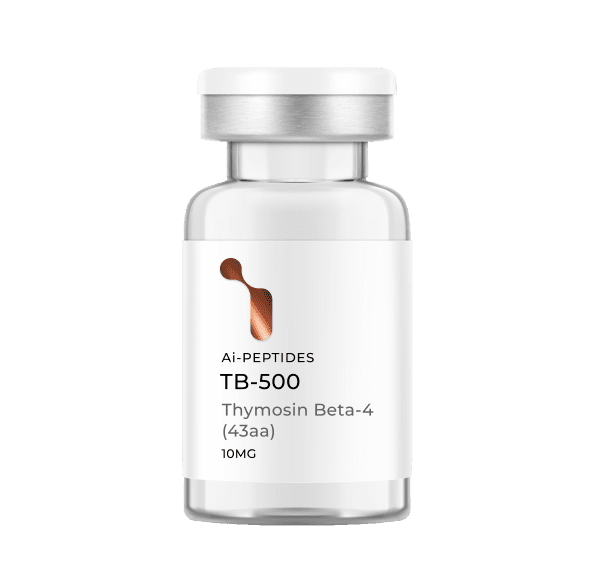
TB 500

 Crypto
Restock in progress. Add your email and we will tell you the moment this compound is back in stock.
One email when this is back in stock. No spam, unsubscribe anytime.
Product details
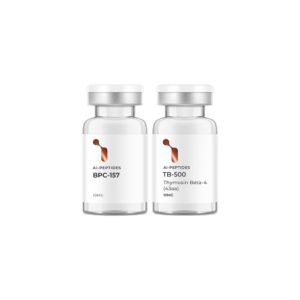
TB-500 is a synthetic peptide corresponding to an actin-binding region of thymosin beta-4, a small, highly polar actin-sequestering protein that is one of the most abundant intracellular proteins in mammalian cells. It belongs to the actin-binding peptide class.
In the published preclinical literature, thymosin beta-4 has been characterised at the molecular level as a regulator of the actin cytoskeleton: it binds monomeric G-actin in a 1:1 complex and shifts the equilibrium between monomeric and filamentous actin. In-vitro and cultured-cell work has mapped how it sits along the actin monomer, how that interaction depends on the bound ATP or ADP nucleotide, and how the N-terminal actin-binding motif governs the stability of the complex. It is supplied as a research compound and is not intended for human or veterinary use.
Full specifications
Complete your order
supplied for laboratory research only
Recently viewed
picks up where you left off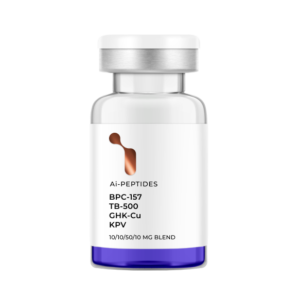
Research
TB-500 corresponds to an actin-binding region of thymosin beta-4, which has been characterised in preclinical laboratory models. The primary studies below, in cell-free biochemical assays and in cultured cells, examined how the peptide binds the actin monomer, how that binding tracks the bound nucleotide, and how it sets the monomer-to-filament equilibrium. The literature is preclinical; it describes the compound, not any outcome in humans.
5 preclinical studies indexed · actin binding and sequestration, nucleotide-state control of the actin interaction and actin regulation in cultured cells · links open on PubMed
Actin binding and sequestration 2 studies
In vitro
Thymosin beta-4 binds the actin monomer in an extended conformation, contacting both the barbed-end and pointed-end faces
Using circular dichroism, NMR, and cross-linking, the study placed thymosin beta-4 in an extended conformation along the actin monomer, contacting both the barbed-end and pointed-end faces and forming a 1:1 complex that blocks polymerization and nucleotide exchange.
Read the study ↗
In vitro
The N-terminus and central actin-binding motif of thymosin beta-4 govern the stability of its complex with the actin monomer
By substituting and modifying single residues across the N-terminal segment and the central actin-binding motif of thymosin beta-4, the study mapped the residues that set the stability of its 1:1 complex with the actin monomer.
Read the study ↗
Nucleotide-state control of the actin interaction 2 studies
In vitro
The ATP and ADP nucleotide state of the actin monomer modulates its interaction with thymosin beta-4
In cell-free assays, thymosin beta-4 bound MgATP-actin with roughly fifty-fold higher affinity than MgADP-actin, tying its monomer-sequestering activity to the nucleotide state of the actin monomer as a measured endpoint.
Read the study ↗
In vitro
Thymosin beta-4 and profilin act as opposing controllers of actin nucleotide exchange on the monomer
In biochemical assays, bound thymosin beta-4 blocked nucleotide exchange on the actin monomer while profilin promoted it, framing the two as opposing controllers of the monomer pool that set the rate and extent of polymerization.
Read the study ↗
Actin regulation in cultured cells 1 study
Links open the original study on PubMed. For research and educational purposes, descriptive of the published preclinical literature, not therapeutic claims about any ai-peptides product. A Certificate of Analysis and a Safety Data Sheet are available on request for every batch.
Reviews
Verified-order reviews on service, shipping, and product quality appear here once the first order is reviewed.