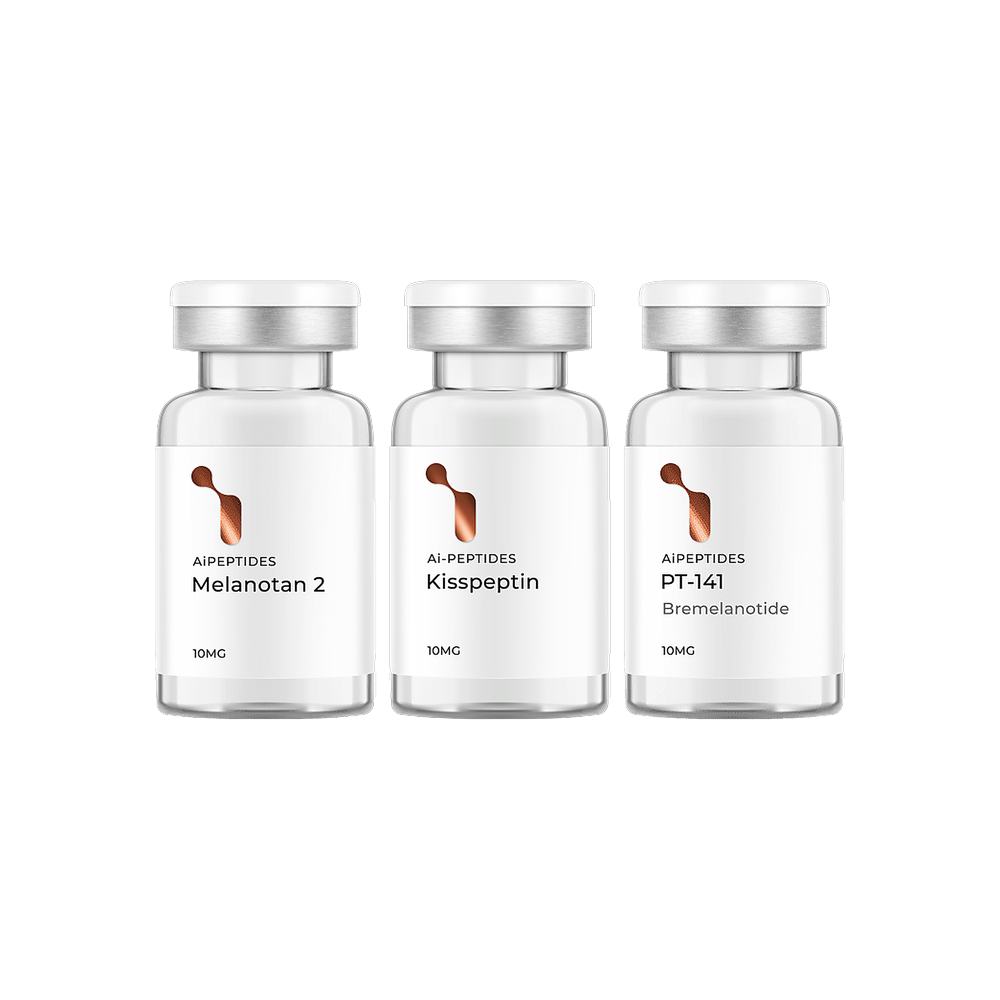
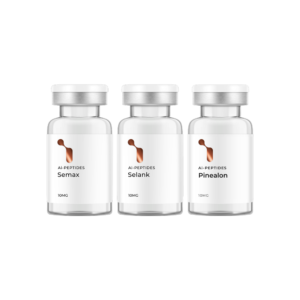
Pathway-3 Research Set
Pathway-3 Research Set

 Crypto
Restock in progress. Add your email and we will tell you the moment this compound is back in stock.
One email when this is back in stock. No spam, unsubscribe anytime.
Product details
Pathway-3 Research Set is supplied for qualified laboratory research use only.
Product documentation may include identity, nominal fill, purity, lot number, retest or expiry date, and a lot-specific Certificate of Analysis (COA), where available.
Not intended for diagnostic, therapeutic, clinical, food, cosmetic, household, or personal-use applications. Not intended for use outside qualified laboratory research.
Complete your order
supplied for laboratory research only
Recently viewed
picks up where you left off
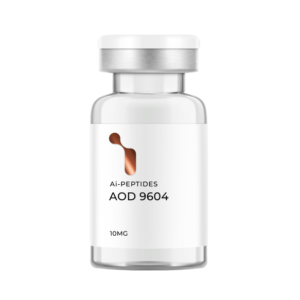
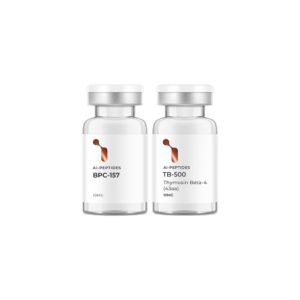
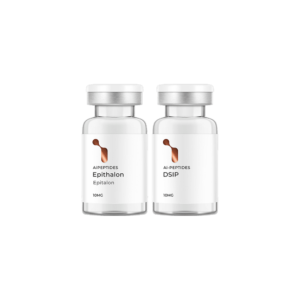
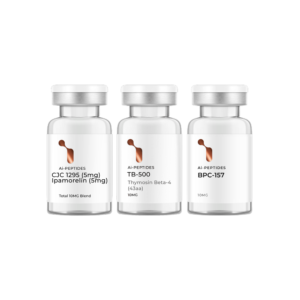
Research
Each compound in this set has been characterised in preclinical laboratory models. The primary studies below, in animal and in-vitro models, examined cellular, biochemical, and mechanistic endpoints. The literature is preclinical: it describes the compounds, not any outcome in humans.
3 preclinical studies indexed · kisspeptin · links open on PubMed
Kisspeptin 3 studies
In vitro
The metastasis suppressor gene KiSS-1 encodes kisspeptins, the natural ligands of the orphan G protein-coupled receptor GPR54
In Chinese hamster ovary cells expressing GPR54, the study measured low-nanomolar binding of kisspeptin to the receptor and quantified receptor activation as PIP2 hydrolysis, calcium mobilisation, arachidonic-acid release, and ERK1/2 and p38 MAP-kinase phosphorylation as molecular endpoints.
Read the study ↗
Animal model
Kisspeptin excites gonadotropin-releasing hormone neurons through a phospholipase C and calcium-dependent pathway regulating multiple ion channels
In acute brain slices from transgenic mice, perforated-patch electrophysiology and calcium imaging recorded the firing of gonadotropin-releasing-hormone neurons and mapped the kisspeptin response to a phospholipase C and calcium-dependent pathway acting on multiple ion channels as electrophysiological endpoints.
Read the study ↗
Animal model
Kisspeptin depolarizes gonadotropin-releasing hormone neurons through activation of TRPC-like cationic channels
In mouse brain slices, voltage-clamp and current-clamp recordings measured a concentration-dependent depolarisation of gonadotropin-releasing-hormone neurons, with the underlying current traced to the inhibition of inwardly rectifying potassium channels and the activation of TRPC-like cationic channels as measured endpoints.
Read the study ↗
Links open the original study on PubMed. For research and educational purposes, descriptive of the published preclinical literature, not therapeutic claims about any ai-peptides product. A Certificate of Analysis and a Safety Data Sheet are available on request for every batch.
Reviews
Verified-order reviews on service, shipping, and product quality appear here once the first order is reviewed.